Nutrition is key to a healthy and happy life. It’s about the food we eat and how it fuels our bodies for everyday tasks. It’s not just about diets or calories; it’s about giving our bodies the nutrients they need to stay strong and energized.
Enhanced Quality of Life: Nourishing our bodies with nutritious foods helps us feel stronger, and ready to take on life’s challenges with confidence.
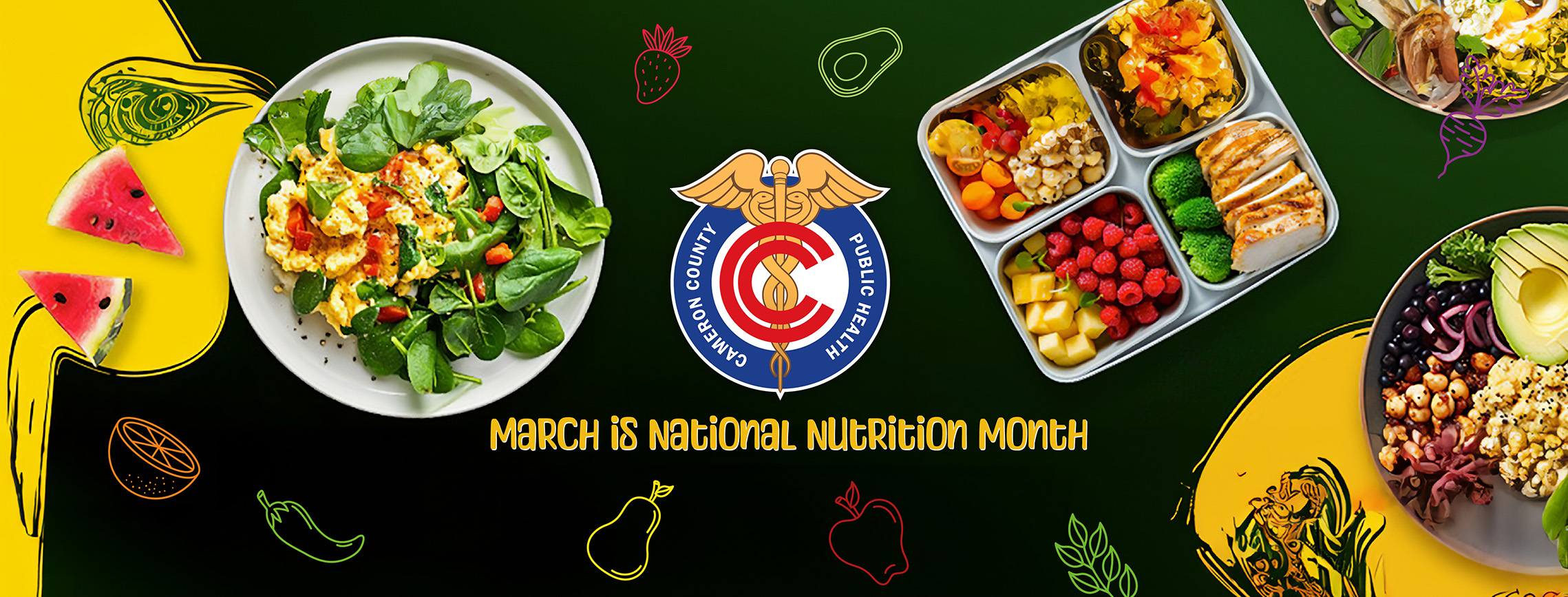
March is National Nutrition Month, a time of celebration and empowerment! At Cameron County Public Health, we’re thrilled to be part of the movement towards healthier eating habits and improved well-being.
Originally launched as National Nutrition Week in 1973 by the Academy of Nutrition and Dietetics, it expanded to a month-long observance in 1980. Throughout March, Americans are encouraged to learn about making informed food choices and developing healthy eating and physical activity habits.
This year’s theme, “Beyond the Table,” emphasizes not only the importance of healthy eating and tips for incorporating it into our daily lives but also highlights the impact of food choices on the environment.
Our food choices affect not only us but also the health of our environment and planet.
Some of the ways we can get creative to stay nourished on a budget:
Ask your healthcare provider if they can refer you to a registered dietitian. RDNs can provide specialized guidelines tailored to your individual needs. You can also access RDN services through community programs, such as the WIC Program, which offers free services for your children.
-Include your favorite cultural foods and traditions.
-Eat foods in various forms including fresh, frozen, canned, and dried.
-Experiment with recipes using different ingredients.
-Try new foods or global cuisines.
We are often most comfortable sticking to our cultural foods and traditions, limiting ourselves from trying and exploring new foods. Learn to explore and try new food and flavors, and don’t be afraid to experiment with recipes that call for ingredients you may not traditionally use.
Recipes and Meal Ideas:
Discover delicious and nutritious recipes, Texas WIC and the USDA’s ChooseMyPlate offer a variety of meal ideas to help you create wholesome and satisfying dishes for your family.
Joe. G. Rivera & Aurora de la Garza | Cameron County Annex Building
1390 W. Expressway 83
San Benito, Texas 78586
956 247-3685
Joe. G. Rivera & Aurora de la Garza | Cameron County Annex Building
1390 W. Expressway 83
San Benito, Texas 78586
Ph: 956 247-3685